
Home Office Storage Mistakes That Create Clutter Over Time
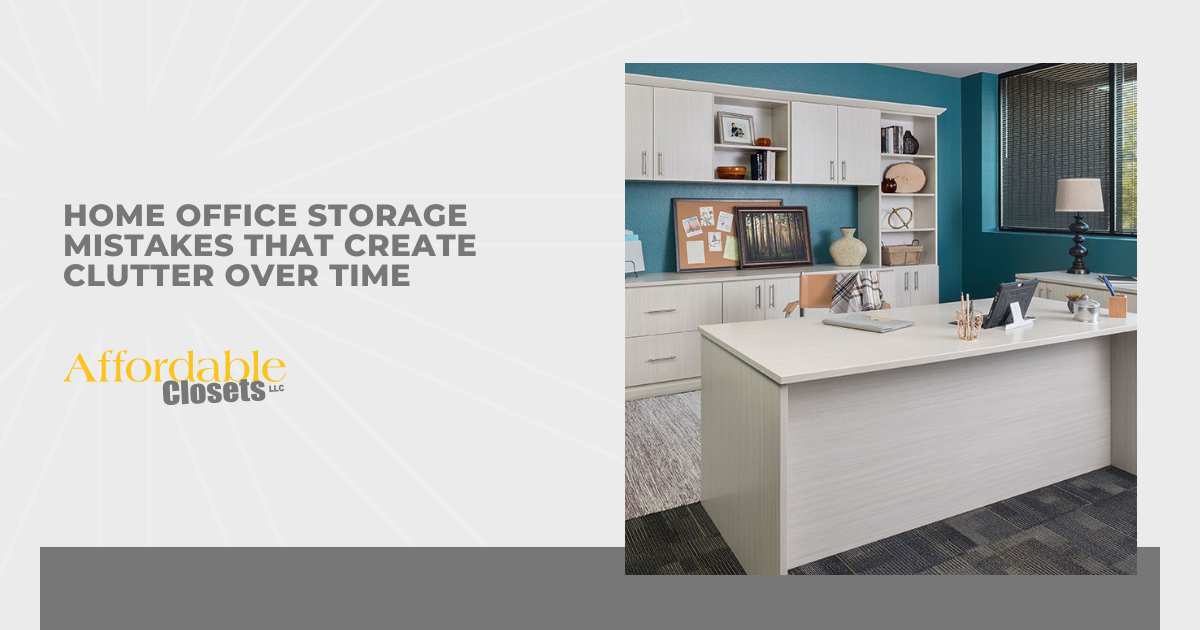
Clutter in a workspace almost never feels intentional. It creeps in while you’re focused on work, deadlines, or daily routines, and suddenly the space feels heavier than it should. I see this happen most often in the home office, where storage decisions are usually made quickly and revisited rarely. Over time, those small choices begin to shape how easy or frustrating the space feels to use.
What I’ve learned is that clutter isn’t about being messy or disorganized. It’s often the result of storage systems that don’t support how someone actually works day to day. Certain mistakes create more friction the longer they’re left in place, even in a home office that started out neat.
Below are the most common home office storage mistakes I see, and why they quietly lead to clutter over time:
- Relying on open storage for everything
- Keeping paper “just in case”
- Using drawers without internal organization
- Storing supplies without defined limits
- Letting cables and tech accessories go unmanaged
- Treating the home office like general storage
- Buying storage before understanding daily work habits
- Not revisiting storage as needs change
Let’s take a closer look at each of these mistakes and what you can do differently to keep your home office functional over time.
Relying on Open Storage for Everything
Open storage can look great at first, which is why so many home offices start there. Shelves feel accessible and visually light, and it’s easy to believe that seeing everything will help you stay organized. I’ve found this works better in theory than in real life. Over time, even the most carefully styled open storage tends to collect more than it should.
In a home office, not everything needs to be on display. Papers stack up, supplies migrate, and items without a clear home end up filling every open surface. What starts as a clean setup slowly turns into visual noise, making the space feel cluttered and harder to focus in. The issue usually isn’t the amount of storage, but how it’s being used.
To fix this, start by limiting what earns a spot on open shelves. Keep only the items you reach for day-to-day or those that genuinely benefit from being visible. Everything else should move into closed storage, drawers, or labeled bins that create built-in limits. Even adding a few well-sized boxes or baskets can make a big difference without changing your setup completely.
A helpful check is asking whether each item on display would still belong there a month from now. If the answer is no, it probably needs a more contained home. Treating open storage as intentional, rather than default, makes a home office easier to maintain and far less likely to collect clutter over time.
Keeping Paper “Just in Case”
Paper clutter has a way of multiplying quietly in a home office. A document gets set aside to deal with later, a note feels too important to toss, or a printed email hangs around longer than planned. Over time, stacks form, folders overflow, and surfaces start to disappear. What makes paper tricky is that it often feels temporary, even when it isn’t.
I see this happen most often with papers that don’t have a clear next step. Manuals, old statements, meeting notes, and “might-need-this” documents end up living in piles because there’s no decision attached to them. When paper doesn’t have a defined purpose or timeline, it tends to stay put. The result is clutter that slowly becomes part of the background.
To address this, it helps to create a few clear paper categories and nothing more. Keep one active folder for papers you’re currently using, one reference file for documents you truly need to keep, and a discard or scan pile that gets cleared regularly. If a paper doesn’t fit into one of those categories, it probably doesn’t belong in your home office. Limiting options makes decisions easier.
Another practical shift is setting a routine for paper, even a simple one. A weekly or bi-weekly reset keeps stacks from forming and forces small decisions before they turn into overwhelm. Paper clutter is less about volume and more about delay. Once paper has a system and a schedule, it stops taking over the space.
Using Drawers Without Internal Organization
Drawers often feel like the easiest storage solution in a home office. You can close them, clear the surface, and feel organized in seconds. The problem is that empty drawers without structure quickly turn into catch-alls. I’ve seen drawers become cluttered faster than almost any other storage area.
Small items tend to migrate when they don’t have defined spaces. Pens mix with cords, sticky notes slide under notebooks, and random supplies collect simply because there’s room. Over time, drawers become harder to use, not easier. Instead of saving time, you end up digging for things you know are in there somewhere.
The fix starts with adding simple internal boundaries. Drawer dividers, small trays, or shallow containers help limit how much can live in one place. Assigning each drawer a purpose also makes a big difference. When a drawer has a clear role, it’s easier to notice when it starts drifting off course.
It also helps to treat drawers as functional storage, not hidden storage. If you don’t want to sort through it later, it probably doesn’t belong there now. A quick reset every few weeks keeps drawers usable and prevents clutter from quietly building out of sight. When drawers are organized on the inside, the entire home office feels easier to manage.
Storing Supplies Without Defined Limits
Extra office supplies rarely feel like clutter in the moment. Pens are small, notebooks stack easily, and backup items seem responsible to keep around. Over time, though, those extras start spreading into every available space. What begins as preparedness slowly turns into overcrowding.
Instead of thinking about supplies by category, it helps to think in terms of capacity. Decide how much space you’re willing to give to paper goods, writing tools, or tech extras, and let the container define the limit. When that space is full, it’s a sign to pause before adding more. This keeps supply levels tied to reality rather than habit.
The real issue shows up when supplies no longer fit where they were originally meant to live. Drawers stop closing easily, shelves feel packed, and it becomes harder to see what you already have. At this point, the home office starts functioning more like storage than a workspace. I’ve seen this shift happen quietly, without anyone realizing why the space suddenly feels harder to use.
Separating what you use weekly from what you rarely touch also makes a difference. Everyday items stay close at hand, while backups move out of the home office altogether. When supplies are contained and intentional, the space feels calmer and easier to work in. Storage supports your workflow instead of competing with it.
Letting Cables and Tech Accessories Go Unmanaged
Tech clutter builds faster than almost anything else in a home office. Chargers, extra cords, adapters, headphones, and devices tend to land wherever there’s space. Because they’re used frequently, they rarely get put away properly. Over time, they become a constant source of visual and physical clutter.
Most tech accessories don’t cause problems on their own. The issue comes when there’s no system for what stays plugged in, what gets stored nearby, and what’s no longer needed at all. Cords pile up in drawers, tangle on desks, or sit in loose piles because it feels easier than sorting them out. The workspace starts to feel messy even when everything technically has a purpose.
Creating order here starts with deciding which tech items deserve immediate access. Daily-use chargers and devices should have a dedicated spot, ideally close to where they’re used. Everything else shows up far less often than expected. I usually recommend grouping those extras together in one labeled container so they don’t drift into every available surface.
It also helps to let go of cables tied to devices you no longer own. Outdated cords tend to linger simply because they’re hard to identify. Taking a few minutes to sort, label, or discard unused tech clears space quickly. With cables contained and intentional, the home office feels calmer and far easier to maintain.
Treating the Home Office Like General Storage
The home office often becomes the easiest place to put things that don’t belong anywhere else. I tend to notice this happening when convenience starts winning over intention. A box waiting to be returned, seasonal items, paperwork from another room, or something you’ll “deal with later” all end up there because it feels easy in the moment. Over time, the space starts doing double duty, and work happens alongside storage.
The problem isn’t just the extra items. It’s how quickly they blur the purpose of the room. When unrelated belongings share space with work tools, staying focused becomes harder and organization slips. The home office stops feeling like a place to work and starts feeling like a holding area.
A clear boundary helps prevent this. Decide what truly belongs in your home office and what doesn’t, and be firm about that line. Items that aren’t tied to how you work need a different home, even if it takes a little extra effort to put them there. Treating this as a regular reset keeps clutter from settling in.
Keeping the office dedicated to work makes everything else easier. Storage decisions become simpler, clutter has fewer places to hide, and the room feels lighter overall. When the home office has a clear purpose, it’s much easier to maintain over time.
Buying Storage Before Understanding Daily Work Habits
Storage often gets purchased with the best intentions. A new shelf, set of bins, or drawer system promises instant organization. The problem shows up later, after the excitement wears off and the storage doesn’t quite match how the space is actually used. Items get forced into places that don’t feel natural, and clutter starts creeping back in.
Work habits shape storage needs more than square footage ever will. Some people reach for paper constantly, others rely on tech, and many switch between tasks throughout the day. Storage that doesn’t align with those patterns quickly becomes frustrating. Instead of helping, it adds extra steps and creates new messes.
I usually look at where items naturally land during a workday before recommending any storage changes. Desks, nearby surfaces, and frequently opened drawers tell you a lot about what needs to be accessible. Storage works best when it supports those habits rather than trying to correct them. Paying attention first prevents buying solutions that don’t get used.
A better approach is to live in the space for a bit before committing to containers or furniture. Notice what you reach for, what piles up, and what rarely gets touched. From there, storage decisions feel obvious instead of forced. The home office stays easier to maintain because the known habits are working with the space, not against it.
Not Revisiting Storage as Needs Change
A home office rarely stays the same year after year. Work responsibilities shift, tools change, and routines evolve, yet storage often remains exactly as it was at the beginning. Over time, systems that once worked start to feel awkward or inefficient. Clutter builds not because there’s too much stuff, but because the setup no longer fits.
Old storage decisions tend to linger out of habit. Files stay organized around projects that no longer exist, supplies remain in places that don’t make sense anymore, and drawers hold items that aren’t used at all. The space quietly stops supporting how you actually work today. Frustration usually follows soon after.
The easiest way to address this is by treating storage as something flexible. Periodic check-ins help identify what’s no longer earning its place. I encourage revisiting storage anytime work routines change, even slightly, instead of waiting for clutter to force the issue. Small adjustments made early prevent the need for major overhauls later.
Letting storage evolve keeps the home office functional and easier to manage. Systems feel supportive rather than restrictive. Clutter has fewer opportunities to settle in. A quick reassessment now and then goes a long way toward keeping the space aligned with how it’s actually used.
Conclusion
Clutter in a home office rarely comes from one big mistake. It builds slowly through everyday storage choices that seem harmless at first. Paying attention to how things are stored, used, and revisited makes a noticeable difference over time. Small adjustments, made early, are far easier than constant resets later on. A home office that supports how you actually work is easier to maintain, easier to focus in, and far more enjoyable to use day to day.