
How Much Do Custom Garage Cabinets Cost?
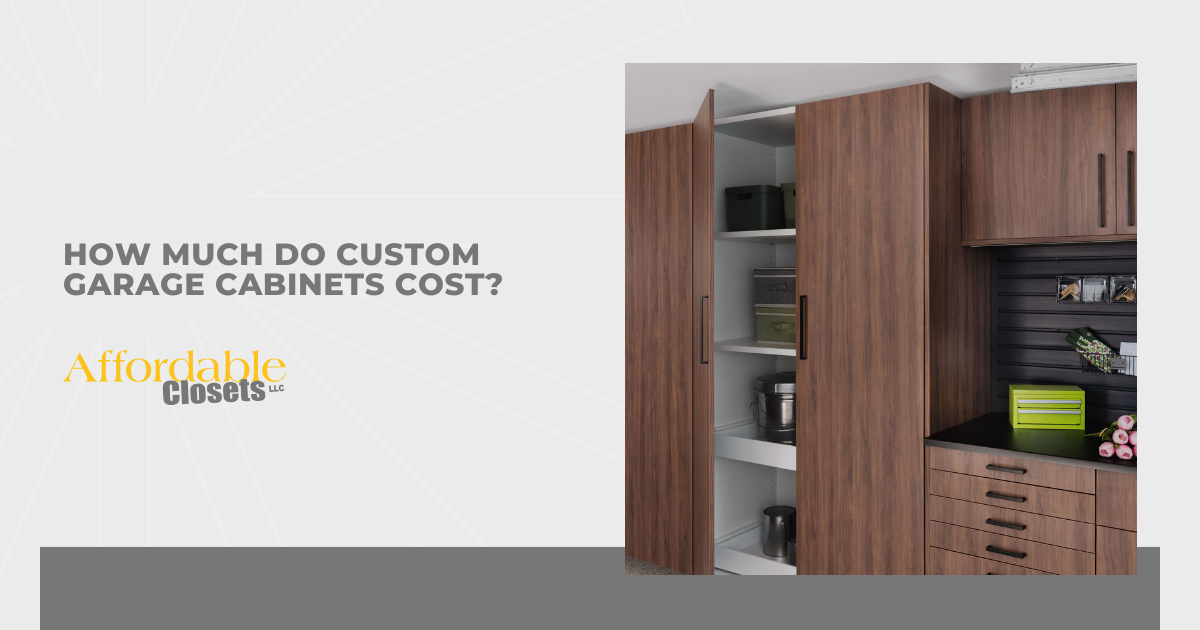
Pricing is one of the first questions homeowners ask when they start exploring garage cabinets, and it's a fair one. The honest answer is that costs can vary widely depending on a handful of key factors, and understanding those factors is what helps you budget accurately and avoid surprises down the line. From what I've seen, the homeowners who walk into the process informed are the ones who end up happiest with both the investment and the outcome.
Garage cabinets aren't a one-size-fits-all purchase, and neither is the price tag that comes with them. A bare-bones setup with stock dimensions looks very different from a fully customized system engineered to maximize every inch of your space, and the cost reflects that gap significantly. Everything from the materials you choose to how complex your garage layout is will influence where your final number lands.
Below are the main factors that influence the price of garage cabinets, so you know exactly what to expect:
- Cabinet size and configuration
- Material and finish selection
- Degree of customization
- Professional installation
- Hardware and accessories
- Add-ons and integrated features
- Garage size and layout complexity
Keep reading for a detailed look at each factor and how it could affect your overall budget.
Cabinet Size and Configuration
The size of your cabinet system is one of the most straightforward cost drivers, and it's usually the first thing that shapes your overall budget. Bigger garages naturally require more cabinetry, and I've worked with homeowners who were genuinely surprised by how quickly the square footage adds up once you start mapping out a full layout. A single base cabinet runs significantly less than a floor-to-ceiling wall system, and the configuration you choose determines how much material, labor, and hardware goes into the project.
Configuration plays just as big a role as size, and it's worth slowing down here before you commit to anything. A simple run of base cabinets along one wall is going to cost considerably less than an L-shaped or U-shaped layout that wraps around the garage. Tall cabinets, corner units, and specialty pieces like overhead storage or integrated workbenches all add to the complexity of the build and push the price up accordingly. The more your layout deviates from a straightforward single-wall setup, the more it'll reflect in your final quote.
Most garage cabinet projects are priced per linear foot, so having a rough idea of how much wall space you're working with gives you a realistic starting point before you even talk to a provider. A two-car garage with cabinets on two walls will naturally fall into a very different price range than a single-car setup with one wall of storage. Figuring out what you need before work begins also goes a long way in keeping your budget intact from start to finish.
Material and Finish Selection
The material your cabinets are built from affects not just the upfront cost but also how long they last and how well they hold up in a garage environment. Budget-friendly options like thermofoil or laminate-wrapped MDF sit at the lower end of the price spectrum, while solid wood and steel cabinets command a significantly higher investment. Each material comes with its own trade-offs in terms of durability, moisture resistance, and how well it holds up in a garage environment over time.
Finish selection adds another layer to the equation. A basic painted or flat finish is going to cost less than a custom stain, high-gloss lacquer, or textured powder coat. Specialty finishes aren't just about aesthetics either. The right finish for a garage needs to stand up to dust, humidity, and temperature fluctuations, all of which are more demanding conditions than a typical indoor cabinet would face.
It's also worth factoring in the long-term value of your material choice. A cheaper material might look appealing on a quote, but it can warp, peel, or degrade faster in a garage setting, leading to replacement costs that outweigh the initial savings. The more cost-effective decision over the life of your cabinet system is almost always the material that was built for the environment from the start.
Degree of Customization
Stock cabinets come in fixed sizes and configurations, and while they're the most affordable option upfront, they rarely make the most of your available space. Semi-custom cabinets offer more flexibility in terms of dimensions and finishes, but they still work within a manufacturer's predefined range. Fully custom garage cabinets are built specifically for your space, your storage needs, and your aesthetic preferences, and that level of precision comes with a higher price tag.
The more tailored the build, the more labor and planning go into it. Custom dimensions, unique configurations, and specialized features like built-in tool storage, pegboard panels, or dedicated zones for sports equipment all require additional design time and fabrication work. Each modification adds to the overall cost, but it also means you're getting a system that fits your garage exactly rather than one you're constantly working around.
It's a distinction that matters more than you might initially think, and in my experience, homeowners who opt for a higher degree of customization are rarely disappointed by the outcome. A fully custom system removes the compromises that come with standard sizing, and that alone changes how usable your garage feels every day. Once you see what you'd be giving up by going with a more limited option, the price difference between semi-custom and fully custom tends to feel a lot more justified.
Professional Installation
The cost of professional installation is a line item that homeowners sometimes underestimate, but it's one that deserves serious attention in your budget. Garage cabinet installation isn't just about mounting boxes to a wall. It involves precise measuring, leveling, anchoring into studs, and ensuring every unit is aligned and secure enough to handle years of heavy use. Cutting corners on installation can compromise the integrity of even the best-built cabinet system.
Labor costs vary depending on the size of the project, the complexity of the layout, and how much prep work the space requires beforehand. A straightforward single-wall installation in a clean, drywalled garage is going to be priced very differently from a multi-wall setup in a space that needs floor leveling or wall repairs first. It's also worth asking upfront what's included in the installation quote, because some providers bundle design, delivery, and installation together while others price them separately.
Choosing a professional installer over a DIY approach also comes with benefits that go beyond convenience. A skilled installer knows how to handle unexpected challenges like uneven floors, out-of-square walls, or limited stud placement, all of which are common in garages. The quality of the installation directly affects how your cabinets look, function, and hold up over time, making it one of the less glamorous but more important parts of the overall investment.
Hardware and Accessories
Handles, hinges, and drawer slides might not be the most exciting part of a garage cabinet project, but they have a real impact on both the final cost and how well your cabinets hold up over time. All of these come in a wide range of quality levels, and the difference between a budget option and a premium one is noticeable both in feel and longevity. Soft-close hinges, heavy-duty drawer slides, and solid metal pulls cost more upfront but hold up significantly better under the kind of daily use a garage cabinet takes.
The type of hardware you choose also affects how your cabinets function on a day-to-day basis. A drawer slide rated for light loads won't perform well in a cabinet storing heavy tools, and a hinge that isn't built for frequent use will start to show wear sooner than you'd want. Hardware that's mismatched to your actual usage is one of the more avoidable sources of premature wear and replacement costs.
Accessories like pull-out shelves, cabinet lighting, built-in power strips, and locking mechanisms add both functionality and cost to your project. Not every accessory is necessary, but the right ones can meaningfully change how efficient and organized your garage feels on a daily basis. A locking cabinet for hazardous materials or a pull-out shelf in a deep base unit, for example, are the kinds of additions that earn their cost quickly.
Add-ons and Integrated Features
Beyond the core cabinet structure, the add-ons and integrated features you choose can quietly push your project into a higher price bracket. Workbenches, slatwall panels, overhead storage racks, bike hooks, and ceiling-mounted pulley systems are popular additions that extend the functionality of your garage well beyond basic cabinet storage. Each one adds to the overall scope of the project and, by extension, the final cost.
Before adding overhead storage racks or ceiling-mounted pulley systems, it's worth making sure your garage roof is in solid shape, since leaks or structural weaknesses can damage cabinets and stored items over time. Having a trusted roofer like
Blue Peaks Roofing inspect the space first helps protect your investment.
Integrated features are a step up from standard add-ons in both complexity and price. A built-in workbench with a solid wood or butcher block surface, for example, requires custom fabrication and precise installation to sit flush with your cabinet run. Dedicated charging stations, built-in compressor cabinets, and custom tool storage inserts are the kinds of features that transform a garage from a storage space into a fully functional workspace, but they come with a price point that reflects that level of engineering.
The key is being honest with yourself about which features you'll actually use versus which ones just look good on paper. A well-chosen set of add-ons can make your garage dramatically more functional without sending your budget off the rails. Homeowners who invest in a few high-impact features tend to get far more satisfaction out of their space than those who load up on everything at once, and that's something I've seen play out time and again.
Garage Size and Layout Complexity
The overall size of your garage and how complex its layout is will influence your project cost in ways that go beyond just the number of cabinets you need. Irregularly shaped garages, those with support columns, low ceilings, uneven floors, or limited wall space, present design and installation challenges that a straightforward rectangular garage simply doesn't. Every workaround required to accommodate an unusual feature adds time, materials, and labor to the project.
A three-car garage with multiple entry points and windows scattered across the walls is a fundamentally different project from a clean, open two-car space. Windows and doors interrupt wall runs and require cabinets to be cut, rerouted, or custom-sized to fit around them. The more obstacles your garage has, the more problem-solving goes into the design, and that problem-solving has a cost attached to it.
Floor levelness is another factor that's easy to overlook but matters more than most people expect. Cabinets need to be perfectly level to function correctly, and an uneven garage floor often requires shimming, scribing, or custom base adjustments to achieve that. A detailed site assessment before work begins is what separates an accurate quote from one that comes with unexpected charges down the line.
Conclusion
Every factor covered in this article works together to shape your final project cost, and no two garages or homeowners land in the same place because no two spaces are exactly alike. The more you understand what's driving the numbers, the better equipped you are to make smart decisions about where to spend and where to scale back. A garage cabinet project done right isn't about chasing the lowest quote or the most premium option. It's about finding the right fit for your space, your storage needs, and your budget.