
8 Design Tips for a Kids' Closet That Grows With Your Child
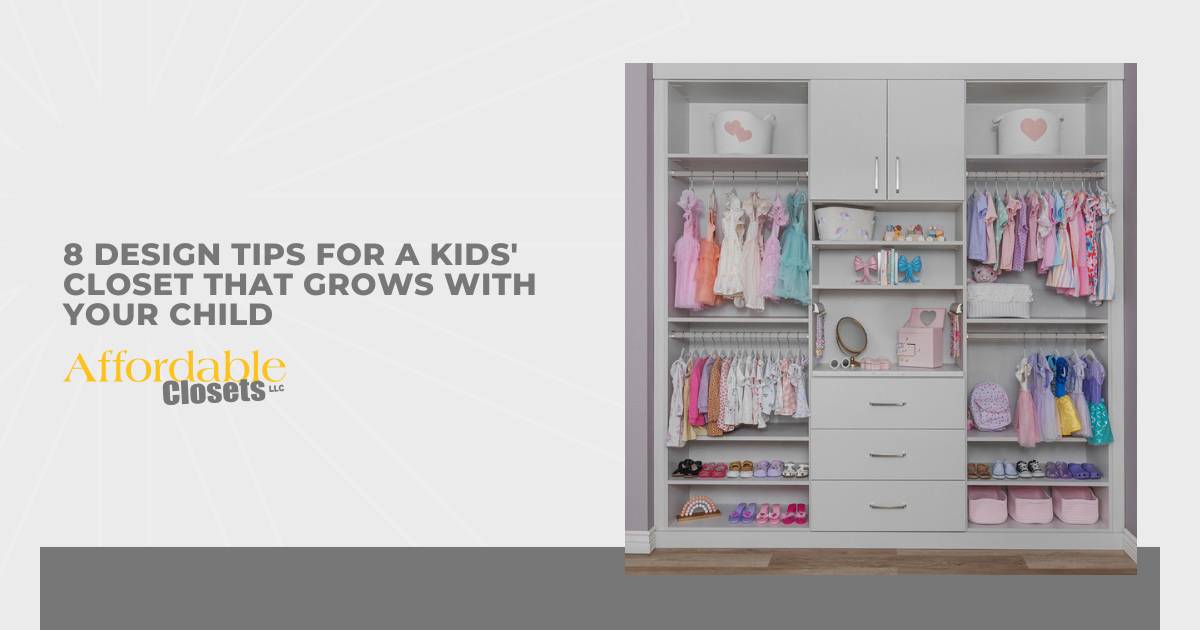
Most parents tell me their kids' closets feel outdated almost as soon as they set them up. You buy a rod at the right height, add a few shelves, and within a year your child has outgrown the clothes, the reach, and the whole layout. This cycle of reshuffling and spending again comes down to closets designed for right now instead of what comes next.
Good news is you can plan a closet that adjusts as your child grows without rebuilding it every few years. Smart choices in shelving height, rod placement, and storage zones let one closet serve your child from toddler years through their teens. You save money, reduce clutter, and end up with a space that actually keeps up with your kid.
Building kids' closets that grow with your child comes down to eight design tips you can start using today:
- Choose adjustable shelving for every age
- Install height-flexible rods and hooks
- Add clear bins for easy sorting
- Use neutral colors that last longer
- Create low zones for little hands
- Plan extra space for future growth
- Label everything for simple independent cleanup
- Mix open and closed storage solutions
Let me walk you through the eight ideas I rely on most, since they're what make kids' closets flexible enough to grow with your child.
Choose Adjustable Shelving for Every Age
Kids grow fast, and their storage needs shift just as quickly. Toddler onesies take up little room, but a ten-year-old's sweaters, sports gear, and books need real space. Adjustable shelving lets you move shelves up, down, or out as those needs change, so you're never stuck with a layout built for one short season.
Fixed shelving is one of the first things parents regret in kids' closets. You lock yourself into spacing that fits today's items and fights against tomorrow's. With adjustable tracks and brackets, you simply reposition each shelf in minutes instead of tearing out the whole system and starting over.
My favorite part is how this flexibility protects your budget over the long run. Kids' closets built with adjustable shelving serve your child from crib years right through high school. You spend once, then adapt as often as life demands without paying for a full redesign each time.
Install Height-Flexible Rods and Hooks
Hanging space is where most closets fall short as a child grows. I've watched families struggle with rods stuck at the wrong height for years, and it's a fixable problem. Little kids need low rods they can actually reach, while older kids need higher bars for longer garments. Height-flexible rods solve both problems by letting you raise or lower the bar as your child gets taller.
Here are the hooks I recommend adding at different heights:
- Low Hooks Near the Door: Perfect for backpacks, jackets, and pajamas. Kids can grab and hang their own things, which builds independence and keeps the floor clear of everyday clutter.
- Higher Hooks for Overflow: Ideal for seasonal coats, garment bags, or items you'd rather keep out of reach. You control what stays accessible while still making room for the pieces your child handles daily.
Accessibility is a big part of what makes kids' closets actually work. When your child can reach their own clothes, they take ownership of getting dressed and cleaning up. Height-flexible rods and hooks turn a closet into a space that supports your child at every stage instead of one you constantly rearrange for them.
Add Clear Bins for Easy Sorting
Small items cause the biggest mess in kids' closets. Socks, hats, mittens, and small toys disappear into piles unless they have a home. Clear bins give each category its own spot, and because you can see straight through them, nothing gets lost at the bottom or forgotten in a back corner.
Clear bins keep everything visible, and that alone helps you and your child track what you already own. You avoid buying duplicates, and getting dressed becomes faster because your child spots what they need at a glance. Bins stacked neatly on shelves also free up space and keep the whole closet feeling tidy rather than crammed.
Labeling each bin by type makes the system even stronger. I tell parents to sort by clothing category, by season, or by size their child hasn't grown into yet. Kids' closets stay organized when every item has a clear place, and clear bins make that simple to maintain week after week.
Use Neutral Colors That Last Longer
Bright themes feel fun when your child is three, but tastes change fast. I've seen plenty of parents repaint or replace themed kids' closets far sooner than they expected, and it's a cost that's easy to avoid. Cartoon characters and bold pinks or blues can look dated within a couple of years, and few kids want the same style as a teenager that they loved as a toddler.
Whites, soft grays, and warm woods give you a clean backdrop that works at any age. You can still add personality through removable bins, baskets, and wall art that swap out easily as your child's taste matures. Right color choices upfront save you from redoing the whole space later.
Neutral tones also make the room feel calmer and roomier, which matters in smaller bedrooms. Kids' closets with a timeless palette blend into any decor you choose down the road. You get years of use out of the same finishes while keeping the flexibility to refresh the look on a budget.
Create Low Zones for Little Hands
Independence starts with reach. When everything sits above a small child's head, you end up handling every outfit and every cleanup yourself. Low zones fix that by placing daily items right where little hands can grab them, which teaches responsibility early and takes pressure off you.
Here are a few low zone ideas I rely on that hold up as your child grows:
- Knee-Height Rods and Cubbies: Let your children pick their own shirts and shoes. They feel proud getting dressed on their own, and you spend less time reaching for them each morning.
- Floor-Level Bins for Shoes and Toys: Give small children an easy target for tidying up. Cleanup turns into something they can manage alone, which builds good habits that stick as they grow.
Low zones adapt right alongside adjustable shelving and flexible rods, and I always build one into kids' closets for my younger clients. Raise the low zone as your child gets taller, or convert it into extra hanging space once they outgrow it. Kids' closets designed with reach in mind grow more useful every single year.
Plan Extra Space for Future Growth
Wardrobes expand as kids age. Sports uniforms, hobby gear, bigger shoes, and school supplies all pile up in ways a toddler closet never anticipated. Planning extra room now saves you from a cramped, overstuffed closet later, so build in more capacity than your child currently needs.
Parents often fill every inch for the current stage, then run out of room within a year or two. Leaving open shelf space, empty rods, and flexible zones gives the closet somewhere to grow without any remodeling. One of the most common planning gaps I see is families coming to me after outgrowing a setup they built just a couple of years back.
Think about the categories that expand fastest and leave breathing room for each. Reserve a shelf for future shoe sizes, keep a rod section open for longer clothes, and set aside a bin or two for gear you can't predict yet. Kids' closets that plan ahead stay functional through every growth spurt your child throws at them.
Label Everything for Simple Independent Cleanup
Labels turn a closet into a system your child can run without you. I believe good labeling is what keeps kids' closets organized long after installation day. When each shelf, bin, and drawer says what belongs inside, kids know exactly where things go. Cleanup stops being a battle because your child follows the labels instead of asking you every step of the way.
Pictures work well for kids who can't read yet, while words suit older children who are learning. You can use printed tags, chalkboard labels, or simple stickers, and each one reinforces the habit of putting things back in place. Small touches like these make a big difference in daily routines.
Consistency matters more than fancy design here. Match every label to a clear category and keep the wording simple so nothing gets confusing. Kids' closets with a labeled system teach responsibility, cut down on daily mess, and make it far easier for your child to stay tidy on their own.
Mix Open and Closed Storage Solutions
Balance is what makes a closet both practical and neat. Open storage keeps daily items within easy reach, while closed storage hides clutter and protects things you'd rather not see. Combining the two gives kids' closets the best of both worlds, so the space stays functional without looking chaotic.
I find that a thoughtful mix works far better than leaning fully one way, so here's how I split open and closed storage in most kids' closets I design:
- Open Shelves, Cubbies, and Hooks: Best for the items your child uses every day. Quick access keeps mornings smooth and encourages kids to grab and return things without any help from you.
- Closed Drawers and Doors: Ideal for seasonal clothes, keepsakes, and overflow. Tucking these away keeps the closet looking clean and shields delicate items from dust while freeing up your open space.
Blending both styles also lets the closet adapt as your child matures. Younger kids benefit from more open access, and older kids often want more closed storage for privacy. Kids' closets that mix both solutions stay flexible, tidy, and genuinely useful from the toddler years all the way through the teens.
Conclusion
Kids’ closets work best when they’re planned for real family life, not just a perfectly staged room. Children grow, routines shift, and storage needs change faster than most parents expect. When the closet can adjust with those changes, it becomes easier to keep the space calm, useful, and manageable. A well-designed closet also helps your child build better habits over time, which makes the investment feel practical long after the first installation.